

The right leads become our businesses’ lifeblood—the wrong ones lead to us spending way more money than needed. We don’t want to spend aimlessly on lead generation.
Qualifying leads is just as important, if not more important, than acquisition. But sticking with manual qualification can take up too much of our time and effort.
To save time and costs, we need the right lead qualification tools. The question now is, how do we know which one fits our business best? That’s what we’re here to help with.
Modern lead qualification has also changed considerably. Instead of relying exclusively on forms, basic lead scores, and scripted chatbots, businesses can now use AI sales agents, behavioral data, CRM activity, firmographic information, and buying signals to identify promising prospects.
By the end of this guide, you’ll learn:
- Why businesses need lead qualification tools
- The features to look for in lead qualification software
- Five lead qualification tools worth considering
- How AI is changing the way businesses qualify leads
Are Lead Qualification Tools Necessary?
The answer is an absolute yes. Lead qualification is an essential part of almost every sales process.
Many businesses skip out on extra costs like lead qualification tools in an attempt to get more revenue. This often leads to in-house sales or marketing teams doing the brunt of manual labor.
Qualifying leads on top of regular tasks can be exhausting, especially when scaling. To compensate, businesses will either hire more people in-house or outsource the process.
Doing either of the two can cost considerably more than implementing the right software. Not only can qualification tools save time and money, but they also enable your sales team to focus on what they do best: talking to prospects who actually have the potential to become customers.
The goal isn’t necessarily to eliminate human involvement. It’s to prevent salespeople from spending their time researching, chasing, and following up with leads that aren’t a good fit.
But before making the investment in a lead qualification tool, you have to know what to look for.
Features to Look for in Lead Qualification Tools
Each qualification tool has its own set of features, pricing plans, and target markets.
For example, qualifying leads for a SaaS platform can look drastically different from qualifying prospects for a home service business.
Some businesses might need an AI agent that talks with website visitors. Others need a scoring system that evaluates thousands of contacts already sitting inside their CRM.
Still, there are several features worth considering regardless of your industry.
Easy Learning Curve
Mastering all the bells and whistles of a lead qualification tool takes time. The tool you use should be intuitive, have an easy learning curve, and provide documentation or educational content explaining how it works.
Ideally, you want something as close to plug-and-play as possible.
Tools with dozens of features might look good on paper, but those features aren’t particularly valuable if your team never learns how to use them.
Consider how easily the platform fits into your existing sales process before choosing based purely on the number of features available.
Flexible Pricing Options
Does a qualification tool’s price make sense for your business financially? Are there flexible pricing options that fit your needs?
Answering these questions is key.
At the end of the day, your budget ultimately decides what tools you can and can’t use.
It can also help to compare the cost of the software against the cost of the work you’re trying to automate. A relatively expensive tool may still make sense if it eliminates hours of manual research, qualification, follow-up, or appointment scheduling every week.
Automation and AI Qualification
One of the best ways to qualify leads at scale is through automation.
Traditional qualification systems typically use predefined rules. For example, a company with more than 100 employees might receive additional points, while someone who visits a pricing page might receive another five points.
Those systems are still useful.
But newer AI-powered platforms can go further by interacting directly with prospects, answering questions, interpreting buying signals, following up with leads, and deciding when somto pass a lead a salesperson.
Instead of requiring every prospect to wait for an available sales rep, AI agents can increasingly handle the earliest stages of qualification automatically.
CRM and Data Integrations
Lead qualification becomes much more useful when the system can access the information your business already has.
Look for tools that integrate with your CRM and other sales and marketing platforms.
A tool might consider:
- Company size
- Industry
- Job title
- Website activity
- Email engagement
- Previous conversations
- Form submissions
- CRM activity
- Product usage
- Pricing page visits
The more relevant context is the easier it becomes to distinguish a potentially valuable prospect from someone who simply downloaded an ebook once.
Custom Lead Scoring and Buying Signals
Not every business defines a qualified lead the same way.
A B2B SaaS company targeting Fortune 500 businesses might consider a prospect with 20 employees a poor fit. A small business product might consider that same company an ideal customer.
Your qualification system should reflect your actual ideal customer profile and sales process.
That means looking for tools that let you combine fit signals with behavioral signals.
Someone who perfectly matches your ideal customer profile but has shown no interest isn’t necessarily ready for sales. Likewise, a visitor to your site might not be valuable if they don’t match your target customer.
The strongest qualification systems help you evaluate both.
5 Lead Qualification Tools Worth Considering
Hiring more people simply to offload repetitive tasks like lead qualification can create unnecessary overhead.
Artificial intelligence, automation, CRM data, and predictive scoring have made it possible to qualify leads in several different ways.
Here are five tools worth considering.
1. Qualified
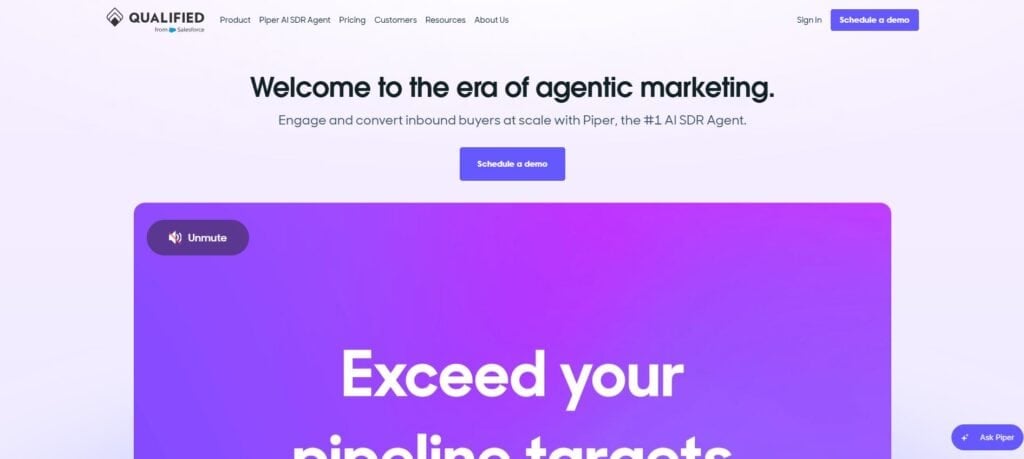
Qualified is a strong option for B2B companies looking to automatically qualify inbound website visitors.
Its Piper AI SDR engages prospects through a company’s website and email, answering questions, gathering information, following up with leads, and working toward booking meetings.
Qualified can also use firmographic information and buyer intent to determine which prospects deserve more attention and route higher-value leads to the appropriate salesperson.
This makes it particularly useful for businesses that generate meaningful inbound traffic but struggle to convert enough of that traffic into sales conversations.
Instead of treating every website visitor the same, Qualified can help determine who the visitor is, what they’re interested in, and whether they appear to fit your target customer profile.
Qualified is especially geared toward B2B teams using Salesforce, so smaller businesses or companies using a different CRM may want to compare it with other options before committing.
Best for: B2B companies that want AI-powered inbound lead qualification.
2. 1mind
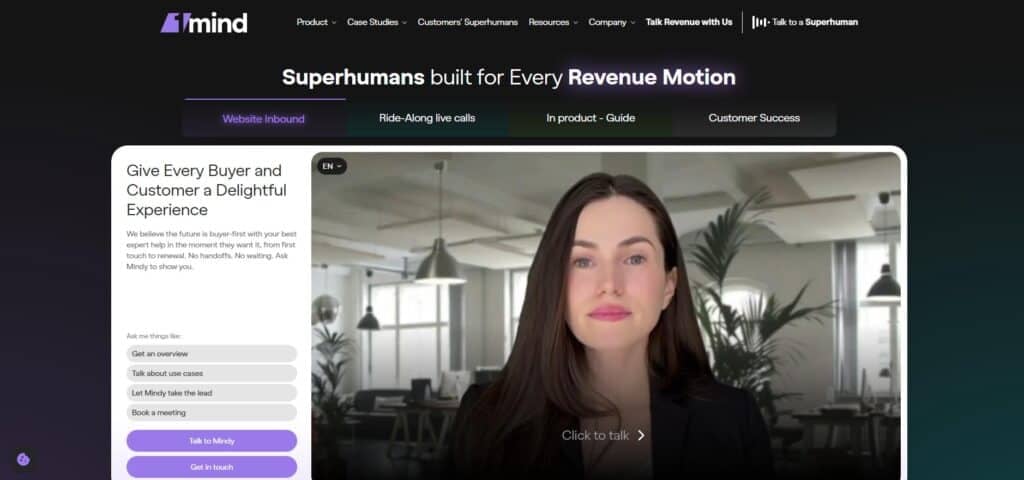
1mind takes the idea of a website chatbot considerably further.
Its AI sales agents, which the company calls Superhumans, are designed to interact with prospects across the buying journey. Depending on how they’re configured, they can answer questions, qualify buyers, demonstrate products, and help move prospects toward a sales conversation.
The platform has become especially noteworthy following Salesloft’s decision to retire Drift.
Salesloft announced that Drift will be retired on January 31, 2027 and recommends 1mind as the replacement for Drift’s chatbot functionality.
That’s an important distinction for businesses researching conversational qualification tools in 2026. Drift was once one of the biggest names in this category, but companies implementing a new system today should be looking at its successors instead.
1mind makes the most sense for B2B companies that want AI to play a direct role in buyer conversations rather than simply assigning prospects a numerical lead score.
Best for: Businesses looking for an AI sales agent or a modern alternative to Drift.
3. HubSpot
Sometimes the best lead qualification tool is already part of your CRM.
HubSpot allows businesses to build lead scores based on the attributes and behaviors of contacts, companies, and deals.
For example, you might assign a higher fit score to companies in your target industry and size range. You could separately score engagement based on signals such as website visits, marketing interactions, or other activities.
HubSpot also allows businesses to create combined scores that consider both fit and engagement.
This helps solve one of the biggest problems with traditional lead scoring.
A lead can be highly engaged without being a good customer.
Another lead could be a perfect customer on paper but show very little buying intent.
Looking at both factors helps sales teams prioritize prospects that are both relevant and interested.
HubSpot can also use CRM and engagement data for predictive scoring, depending on the products and subscription level you’re using.
If your business already runs its sales and marketing operations through HubSpot, keeping qualification inside the same ecosystem can also reduce the number of additional tools your team needs to manage.
Best for: Companies already using HubSpot that want CRM-native lead scoring.
4. Overloop
You can start qualifying leads before they ever visit your website.
That’s where Overloop comes in.
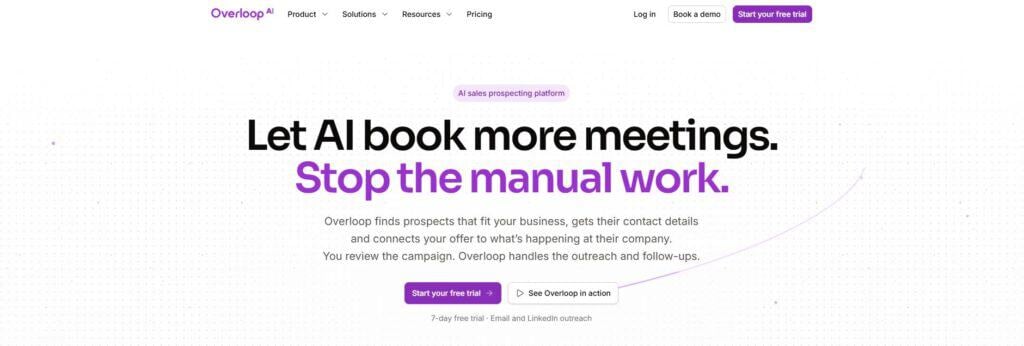
Formerly known as Prospect.io, Overloop has evolved into an AI-powered sales prospecting and engagement platform.
Businesses can use the platform to define their ideal prospects, find relevant companies and contacts, obtain contact information, and run email and LinkedIn outreach campaigns.
Overloop currently provides access to a built-in B2B contact database and supports automated outreach and follow-up sequences. Its higher-tier plans also integrate with CRMs including HubSpot, Pipedrive, and Salesforce.
This makes it a little different from tools like HubSpot or Qualified.
Rather than waiting for a lead to enter your funnel and then determining whether they’re worth pursuing, Overloop helps businesses start with prospects that already match their targeting criteria.
You can define factors such as role, company size, industry, and location before building the prospect list.
For outbound sales teams, that means qualification can begin during prospecting rather than after somebody responds.
Best for: Outbound sales teams that want to combine prospecting, qualification, and outreach.
5. MadKudu / HG Insights
Qualification is particularly powerful when it’s data-driven.
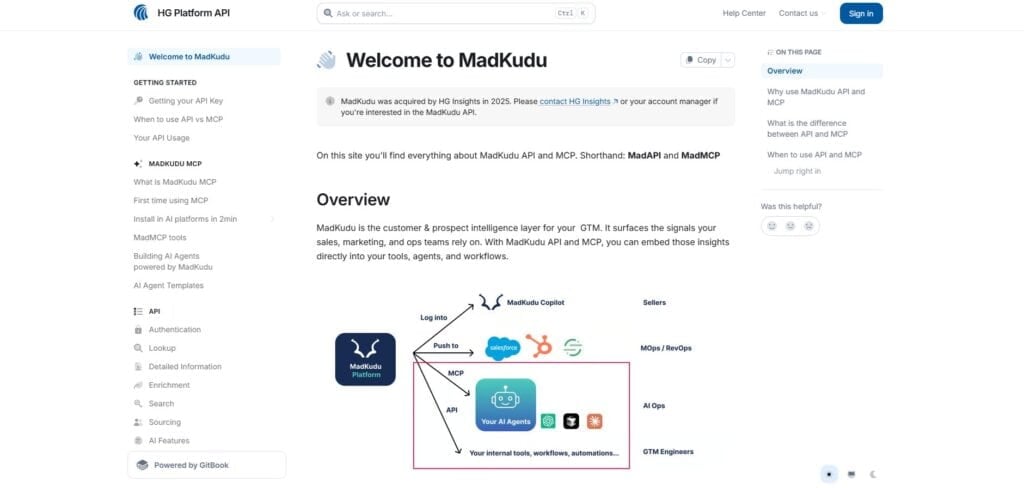
MadKudu built its reputation around helping B2B businesses score, prioritize, and route prospects using customer and behavioral data.
The company has changed since this article was originally published, though.
MadKudu joined HG Insights in 2025, bringing its technology into a broader B2B revenue intelligence and AI ecosystem.
Today, the combined offering is much more relevant to larger B2B organizations interested in using extensive go-to-market data, buyer signals, and AI-powered workflows to improve sales prioritization.
This type of platform can be valuable when your organization has enough prospects that manually deciding who deserves sales attention becomes difficult.
Instead of simply asking whether somebody filled out a form, businesses can use multiple data points to help determine which accounts are worth pursuing.
However, this level of qualification may be unnecessary for companies with relatively small lead volumes. Smaller businesses may get more immediate value from a straightforward CRM scoring system.
Best for: Larger B2B companies with significant lead volume and complex qualification requirements.
How AI Is Changing Lead Qualification
Lead qualification used to be primarily about assigning points.
Download an ebook? Five points.
Work at a large company? Ten points.
Visit the pricing page? Another ten.
Once the lead reached a certain threshold, sales received a notification.
That approach isn’t disappearing, but AI is adding another layer.
AI sales agents can now engage prospects directly. CRM platforms can analyze more behavioral and fit data. Sales platforms can identify promising prospects before outreach begins.
The result is that qualification is becoming less dependent on a single score.
Businesses can increasingly combine:
- Ideal customer profile data
- Behavioral signals
- Website activity
- CRM history
- Conversations
- Buying intent
- AI analysis
That doesn’t mean every company needs the most advanced AI qualification platform available.
A straightforward scoring model that accurately reflects your sales process will usually be more useful than a complicated AI system nobody understands.
The right level of automation depends on the volume of leads you’re handling and the complexity of your sales process.
Which Lead Qualification Tool Should You Choose?
The right tool depends largely on where leads enter your sales process.
If most opportunities come through your website, an inbound AI SDR platform such as Qualified or 1mind could help qualify and convert visitors before a salesperson gets involved.
If your leads already live inside your CRM, HubSpot’s lead scoring capabilities may be all you need.
For outbound sales, Overloop can help qualify prospects, build lists, and run outreach.
Larger B2B businesses dealing with complex buying signals and thousands of potential accounts may benefit more from the data-driven capabilities offered by MadKudu and HG Insights.
Don’t choose a platform simply because it offers the most automation.
Choose the one that removes the biggest bottleneck in your existing sales process.
Key Takeaways
Lead qualification allows your sales reps to focus on prospects with stronger commercial intent. Without it, your team can end up spending hours chasing people who were never likely to buy.
The right lead qualification tools can reduce that workload considerably.
When comparing your options:
- Choose a qualification tool your team can realistically learn and use.
- Make sure it integrates with your existing CRM and sales stack.
- Look for automation that actually removes repetitive work.
- Use both customer fit and buyer engagement when scoring leads.
- Consider AI sales agents if your business receives enough inbound demand to justify automated conversations.
- Use CRM-native scoring for a simpler way to prioritize existing leads.
- Start qualification during prospecting if outbound sales is your primary acquisition channel.
The technology has changed considerably over the past few years, but the objective hasn’t.
Your sales team should spend as much time as possible talking to the people most likely to become customers.