
Why SaaS organic growth looks different in 2026 and what high-performing teams are doing about it.
Executive Summary
The era of easy SaaS organic growth is officially in the rearview mirror. If you’re leading a growth-stage company, you’ve likely noticed a few frustrating trends that back up that claim.
Customer acquisition cost (CAC) keeps spiking, especially in paid channels, while informational blog traffic shrinks as AI Overviews and AI Mode answer questions before users ever click through to websites.
Buyers are researching on Perplexity, comparing your brand on ChatGPT/Claude, and forming opinions before they ever land on your site. AI-generated content has also made SERP differentiation remarkably difficult for SaaS companies without a clear point of view.
At the same time, revenue expectations keep growing. Founders and CMOs want growth and efficiency without a rising CAC. The SaaS companies pulling ahead in 2026 have accepted something most teams haven’t yet: SEO was never supposed to be the traffic-obsessed channel it is today. It’s a pipeline engine above all.
The difference between those two distinct orientations is the leading cause of worry for SaaS companies that feel like their organic strategies are falling apart. This report aims to help contextualize what’s happening in SaaS SEO today.
At a glance, five strategic shifts define the industry in 2026:
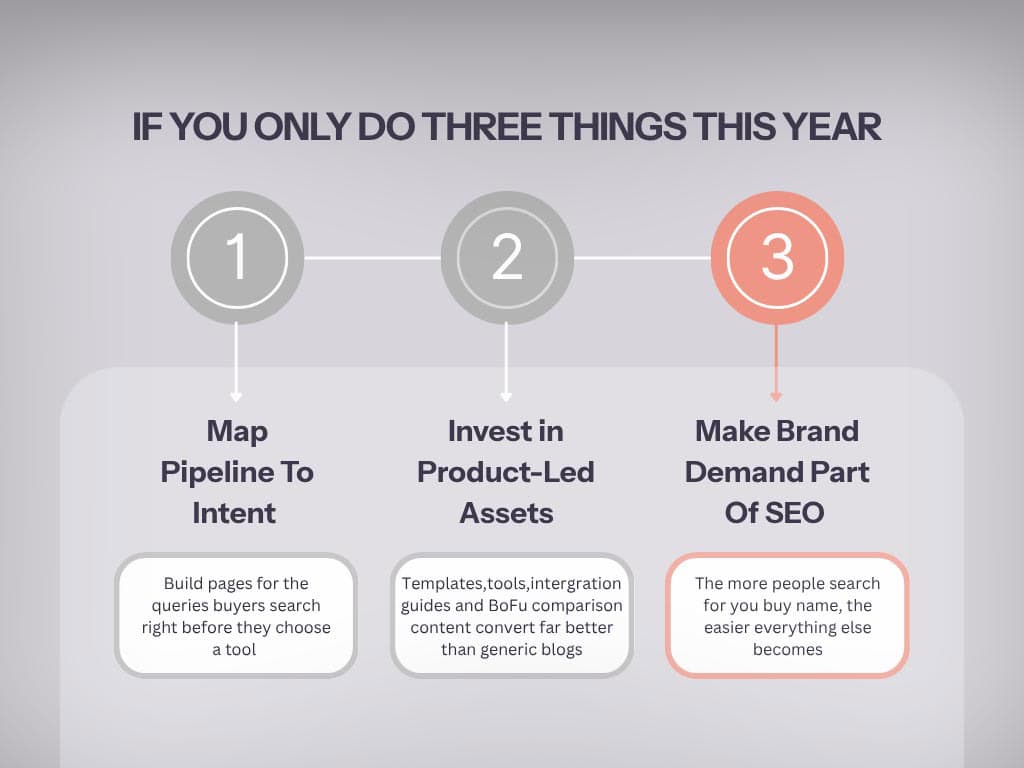
- Pipeline Over Traffic: We need to stop our obsessions with rankings and shift focus to more meaningful metrics like SQLs and conversions. If a keyword doesn’t eventually map back to demo requests or trial signups, it’s likely a distraction for your team right now.
- The Priority Pivot: AI Overviews are effectively ending the ROI on informational queries. High-performing teams are shifting their energy toward middle and bottom of funnel pages where the unique nuances of your product actually count.
- Product-Led Search Assets: Static blog posts are losing ground to interactive tools, templates, and integration hubs. These assets provide immediate value and are much harder for an AI to summarize away into a single paragraph.
- LLM Discoverability: This is the relatively new acquisition channel that quite a few SaaS teams still aren’t prioritizing. You need to optimize your brand presence to become the primary recommendation when a buyer asks an AI platform for the best solution in your category.
- CRO Becomes Inseparable from SEO: Rankings are useless if your demo page is a friction point. Conversion optimization is now closely aligned with effective organic strategies, as search engines prioritize brands that genuinely solve users’ problems.
This report walks through each shift in detail. We’ll go over what’s happening, why it matters for your SaaS company, and exactly what to do about it.
The Macro Shift: Why SaaS SEO is Changing
Search used to be a fairly straightforward transaction. The user had a question, you had the answer, and Google acted as the polite middleman, facilitating the introduction. Today, Google has gone from the middleman to the destination itself. Here’s what has changed.
AI Answers Are Eating Informational Clicks
When Google started placing AI-generated summaries (AI Overviews) above nearly all organic results, it completely rerouted traffic.
Google has been moving toward zero-click search for years, and AI Overviews accelerated that trend. Studies show that when AI Overviews appear, click-through rates for the top organic listing drop by an average of 34.5%. For some publishers, traffic has declined by 70% since AI Overview rollouts.
In practice, if a prospect makes an informational query like “how to calculate net revenue retention,” they get the formula, the context, and maybe a few cited sources right at the top results without having to scroll down to the classic list of blue links:
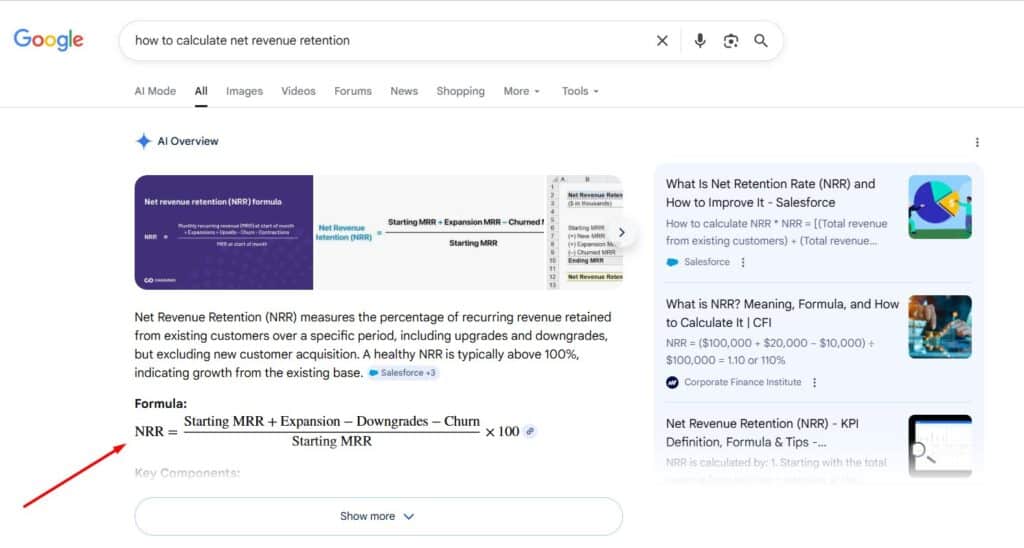
Put simply, AI Overviews have turned the search results page into a closed loop. The implication is that informational traffic is becoming less valuable and less predictable. If your growth plan still depends on ranking for “what is” questions, you’re competing with a machine that never sleeps.
Discovery is Happening Inside AI Platforms
As AI Overviews and zero-click search become the norm, we’re also seeing a massive migration toward large language models (LLMs) during the discovery phase. Buyers aren’t necessarily browsing Google’s page one to find their next CRM or DevOps tool.
Many now ask ChatGPT, Claude, or Perplexity for a shortlist of solutions that integrate with their specific tech stack. A Search Engine Land study found that 37% of consumers now start searches on an AI platform instead of Google.
These AI models pull information from structured content, trusted domains, and strong brand mentions to augment their training data and yield meaningful responses. If your SaaS company isn’t appearing as a cited authority in LLM responses, you’re invisible earlier in the buying journey.
AI Content Flooded the SERPs
The barrier to entry for “good enough” content has hit zero. AI has democratized the ability to write a 2,000-word blog post in seconds, flooding the internet with a sea of sameness.
When everyone is saying the same thing in the same tone, the value of that information plummets. Search engines respond by favoring sites with clear authority, strong internal linking, genuine expertise, and recognizable brands.
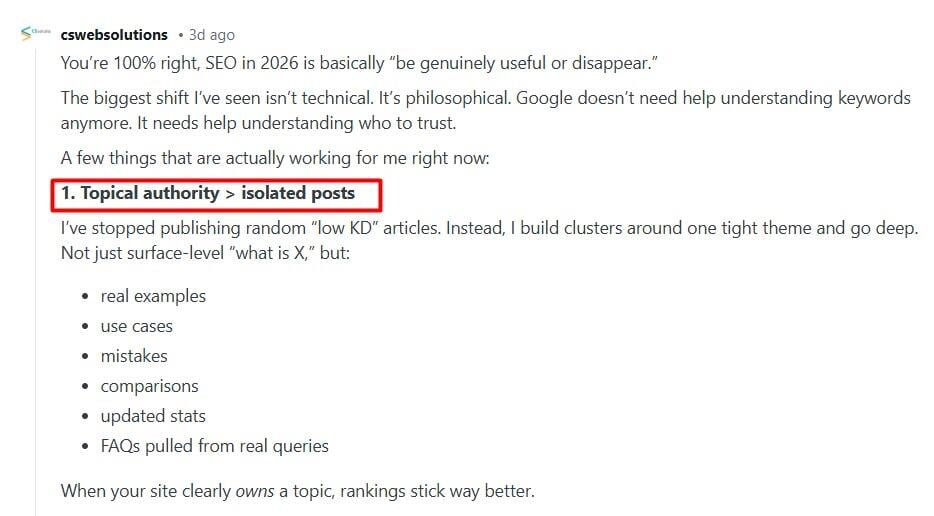
Tools like Ahrefs and Moz have shown how topical authority clusters now outperform isolated keyword pages across competitive SaaS categories. And marketers who apply this in practice confirm its effectiveness.
Source: Reddit
Buyers Are Self-Educating Before Sales Calls
By the time a prospect books a demo, they often know your pricing model and integration gaps. They have read independent reviews, watched product tours, and checked out alternatives.
That means SEO must meet buyers deeper in the journey with integration pages, migration guides, “X vs Y” comparisons, real use-case hubs, and similar content that helps someone justify a purchase internally. Traffic from these pages may be smaller, but the pipeline they deliver is of a much higher quality.
Revenue Teams Expect SEO To Prove Impact
Ultimately, the nature of SEO today is forcing a long-overdue reckoning with revenue. The days of reporting on “sessions” and ‘impressions” to a bored board of directors are over.
In an environment where every marketing dollar is scrutinized, revenue teams are demanding that SEO start acting like the pipeline engine it’s supposed to be. When paid CAC rises across Google, LinkedIn, and Meta, organic has to carry real weight.
“SEO can no longer hide behind vanity metrics. If it isn’t tied to pipeline, revenue, and customer acquisition cost, it’s not a growth channel, it’s just a content expense.”
In other words, SEO now sits inside revenue operations, not just marketing. On that note, let’s go over the important SEO trends for SaaS companies this year and how you can capitalize on them to achieve meaningful business outcomes.
Trend #1: SEO Shifts from Traffic Channel to Pipeline Engine
What’s Happening
Google’s AI Overviews and AI Mode answer more informational questions directly on the results page, which means click share is shifting toward branded, comparison, and high-intent searches.
But while AI reduces traffic volume, it also acts as a natural qualifier that filters out the “curious” and sends you the “serious.” People who click through to your website are more likely to convert because they’ve already been “pre-educated” by the LLMs.
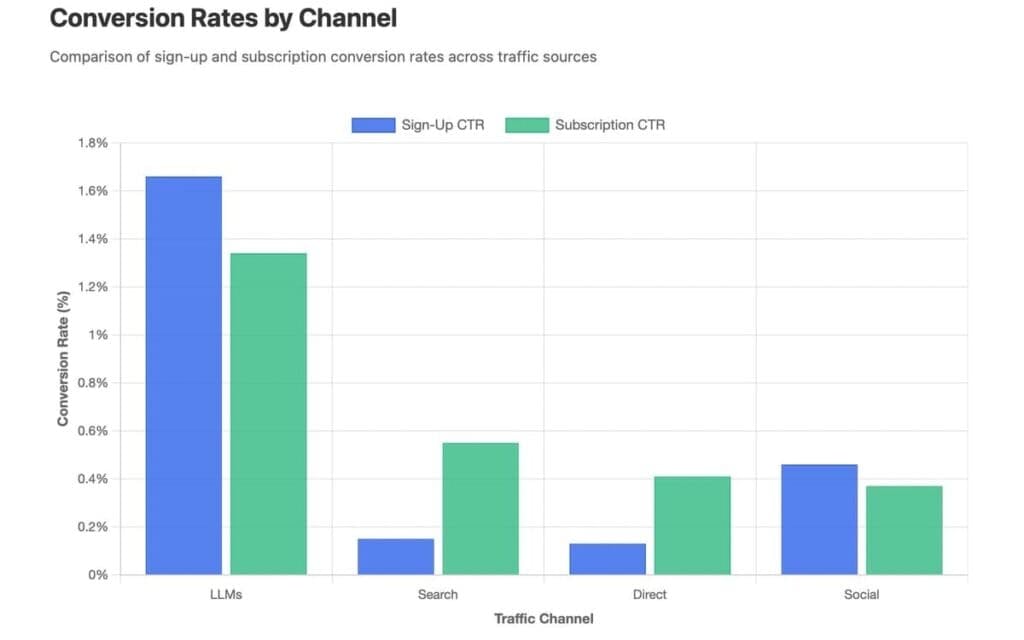
Case in point: a Clarity study found that the conversion rate from LLM traffic is 3X higher than other channels, including traditional search. AI has already answered the “what” and “why,” so users are visiting sites to learn the “how” and “how much.”
Source: PPC Land
Why It Matters for SaaS Companies
The metric most SEO programs are still optimized around (traffic volume) is increasingly disconnected from the outcome the business cares about (pipeline).
A number of growth-stage SaaS teams are reporting that organic traffic is holding steady while demo requests and trial signups from organic sources are declining.
According to Salesforce’s 2025 attribution research, only 41% of marketing organizations use attribution modeling to measure ROI, indicating that the majority still make SEO investment decisions based on traffic data alone.
That’s a significant blind spot when the board is asking efficiency questions and the paid CAC conversation is getting uncomfortable.
What to Do About It
- Connect Search to Revenue: Export queries from GSC. Match them to opportunities in your CRM. Build a dashboard that shows the pipeline by keyword cluster.
- Shift Towards Buying-Stage Content: Prioritize pages around comparisons, integrations, migration guides, and pricing context. These are the pages prospects read right before they sign up for a trial.
- Audit for Product Alignment: If a keyword cannot logically lead to a buying conversation within your sales cycle, deprioritize it. Awareness content is useful, but it should support a clear path to evaluation and, ultimately, conversion.
- Report like a Revenue Team: Show organic influence on pipeline and blended CAC. Skip celebrating traffic spikes that don’t create deals.
| Quick Win: Look at your top 10 most-visited pages. If they haven’t generated a single lead or assisted a conversion in six months, they aren’t assets. Spend that time and money optimizing the pages that actually support the product. |
Trend #2: AI Overviews Are Draining Top-of-Funnel Blog ROI
What’s Happening
Google’s AI Overviews and similar answer formats pull key points from multiple sources and present them without a click. That means broad “what is” and “how does it work” content still gets impressions, but fewer visits.
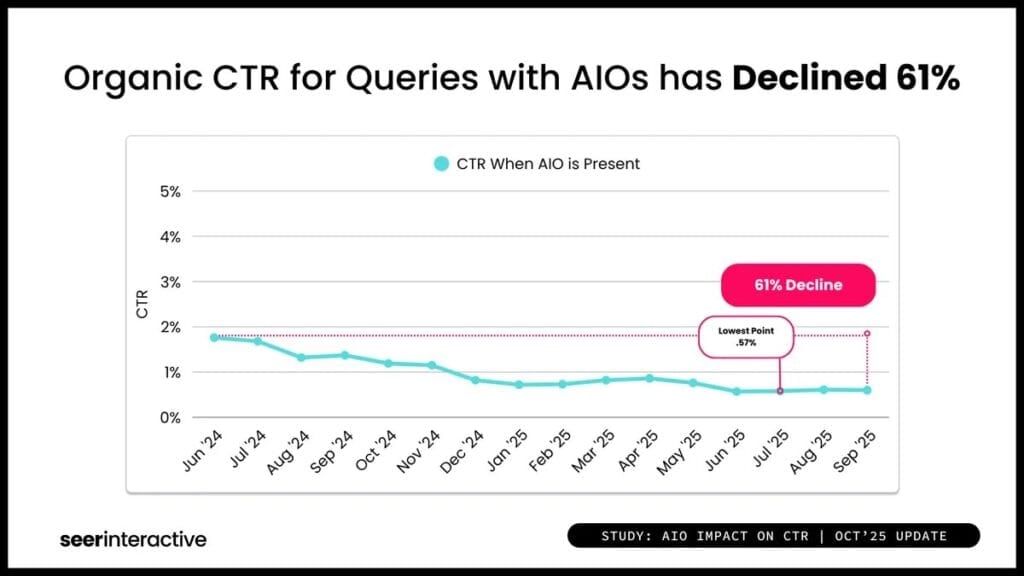
Seer Interactive’s September 2025 study found that organic CTR decreased by 61% (from 1.76% to 0.61%) for queries with AI Overviews, while paid CTR decreased by 68% (from 19.7% to 6.34%).
Source: Seer Interactive
The shift is undeniable. Many other SEO studies between 2024 and 2025 showed double-digit CTR declines on informational queries when AI summaries appear.
At the same time, branded, comparison, and solution-aware searches hold steadier CTR because users still need context and proof before buying.
Case in point: an Advanced Web Rankings CTR study found that the CTR for the #1 position for branded queries is 40% vs. 27% for the #1 position for unbranded queries. In short, top-of-funnel traffic is no longer a reliable growth lever.
Why It Matters for SaaS Companies
For years, SaaS marketing teams used “What is {{Category}}” blog posts as a low-cost way to build a massive retargeting audience. That playbook is officially obsolete. If your organic growth relies on acting as an information desk for your industry, you’re essentially providing free training data to LLMs while your own site metrics remain stagnant.
This matters differently for SaaS than it does for publishers. Publishers lose ad revenue when traffic drops. SaaS companies lose the pipeline contribution that TOFU content was supposed to eventually drive.
What to Do About It
- Shift to “Opinionated Content”: AI can summarize facts, but it struggles to replicate a unique or controversial point of view. Move from writing about topics like “The Ultimate Guide to X” to “Why We Believe Traditional X Is Failing Growth-Stage SaaS.”
- Target the Citation Slot: Treat AI Overviews like the new position zero. Use clear, declarative sentences structured as {{Subject}} is {{Definition}} because {{Proprietary Insight}} to increase the chances of your brand being the cited source within the AI answer.
- Shift Resources Down-Funnel: Reallocate at least 60% of your “educational” content budget toward Middle-of-Funnel (MoFu) assets. In an AI-powered environment, buyers spend more time in the consideration phase. Give them the templates, integration maps, and teardowns that an AI can’t summarize.
- Build “Un-summarizable” Value: If a user can get the core value of your page in a 200-word snippet, they won’t click. Invest in interactive tools, ROI calculators, or proprietary research reports that require a click-through to yield actual utility.
| Quick Win: Pull your GSC data for the last six months. Filter for queries containing “what is,” “guide to,” and similar informational modifiers. Compare the CTR trend against the same period last year. If you’re seeing declines, chances are you’re witnessing AI Overview impact in real time. Use that data to build the business case for shifting budget toward comparison and commercial content before your next planning cycle. |
Trend #3: Product-Led SEO Is Replacing Blog-Led SEO
What’s Happening
The center of gravity in SEO is shifting from traditional blogs to product surfaces. Instead of publishing another 1,500-word explainer, high-performing SaaS teams are building indexable templates, interactive tools like calculators, integration pages, and use-case hubs that double as product entry points.
Companies like Canva, Zapier, and Notion have achieved massive organic visibility through product-led assets such as template libraries and user-generated workspaces. These pages rank because they solve the job immediately. They convert because they are the product.
| Strategic Shift: Stop asking “what should we write about?” and start asking “what can we build that solves a specific problem our buyer is already searching for?” One useful free tool will often outperform three well-written blog posts. The SEO value is higher, the conversion signal is stronger, and the page doesn’t expire. |
Why It Matters for SaaS Companies
Blog-led SEO scales traffic. Product-led SEO scales adoption.
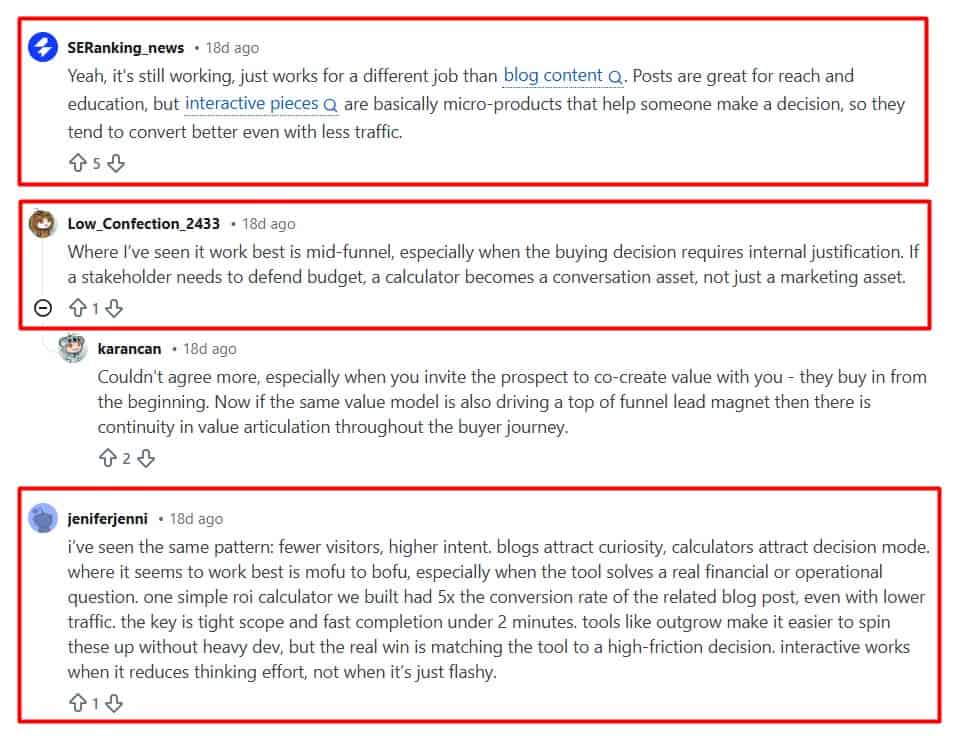
In SaaS funnels, templates and free tools often convert 2x-4x higher than traditional educational blog content because they bridge the gap between learning and doing. These assets are hard to replicate and even harder for an AI to summarize away into a snippet.
Source: Reddit
Instead of reading about how to build a content calendar, users can start with one, using a free Notion template. Instead of reading about workflow automation, users can activate a prebuilt Zapier integration.
Search intent is becoming more task-oriented. Buyers want proof, speed, low-friction trials, and defensibility. Interactive assets satisfy all four. AI summaries can replicate generic advice, but they can’t replicate your proprietary template engine or a live product environment.
In a CAC-constrained market, assets that drive both acquisition and activation outperform content that only generates visits.
What to Do About It
- Productize Your Expertise: Take your most popular “how-to” post and turn it into a downloadable checklist, a template, a web-based calculator, or similar interactive tool. Lead magnets often outperform educational content because they feel more tangible and valuable to users.
- Deploy Programmatic Use-Case Pages: Instead of one “CRM for everyone” page, build a dozen pages for specific workflows like “CRM for Boutique Law Firms” or “CRM for Non-Profits.”
- Map Out Your Integration Ecosystem: Every integration your software supports should have a dedicated landing page optimized for “X + Y integration” queries. These are high-intent goldmines.
- Move Toward “Job-to-Be-Done” Queries: Rather than obsessing over high-volume keywords like “Sales Software,” start targeting the specific task, such as a “Sales Commission Calculator.”
- Create Interactive Comparisons: Instead of a static table, build a “Compare your current spend” tool that shows the exact savings your product offers.
| Common Mistake: Quite a few teams bury their best calculators and templates three levels deep in a resources folder. These tools should be your primary entry points. Search engines want to reward the most helpful path to a solution. Bring yours to the front by linking to them from your header or footer navigation menus. |
Trend #4: Comparison & Alternative Pages Are the Highest-Intent SEO Asset
What’s Happening
Despite the industry-wide decline of top-of-funnel traffic, bottom-of-funnel queries (specifically comparisons and alternatives) have proven remarkably resilient. A Grow and Convert study found that “{{competitor}} alternative” keywords convert at 8.43%, compared to standard keywords at 5.45%, and category keywords at 3.44%.
In practice, some buyers now use AI to generate a shortlist on queries like “HubSpot vs Salesforce,” “best CRM for startups,” or “Mailchimp alternatives,” but they still click through to vendor sites for in-depth expertise.
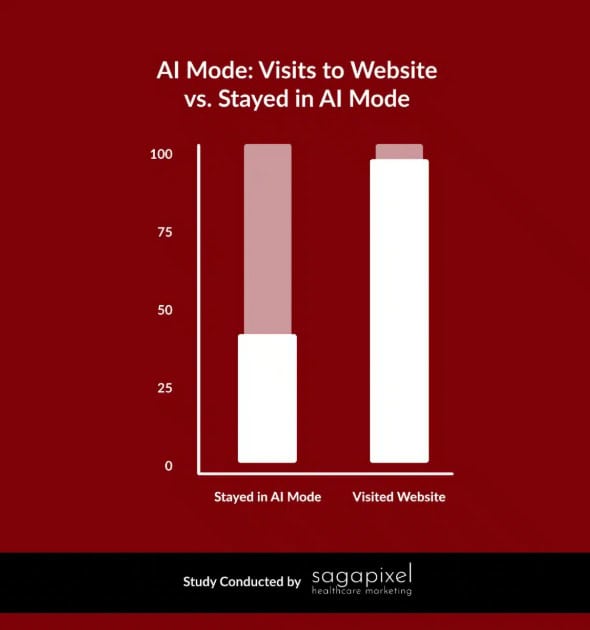
A 2025 Search Engine Land study indicates that while informational CTR has plummeted, Google AI Mode sends traffic on 69% of transactional and comparison queries.
Source: Search Engine Land
Buyers simply don’t trust an LLM to make a five-figure software procurement decision without seeing the primary source.
Why It Matters for SaaS Companies
A user searching for “Your Product vs. Competitor” or “Best {{Category}} for Fintech” is at the one-yard line of the sales funnel. If you don’t own that page, a third-party review site or, worse, your competitor will own the narrative for you.
For SaaS teams, this is one of the fastest paths from SEO to pipeline. A strong comparison page captures high-intent traffic, controls brand narrative, and pre-handles objections before sales calls.
What to Do About It
Map out every meaningful competitor in your category and build a dedicated page for each head-to-head matchup. Do the same for category-level searches. Be direct about where you win, honest about where you don’t, and specific about who you’re built for. This not only builds trust with readers but also makes you more likely to be cited by LLMs.
Vague comparisons don’t convert. Pages that clearly articulate “if X is your priority, here’s why we’re the better fit” do. Structure each page around the buyer’s actual decision criteria rather than your feature list.
| Quick Win: Start with one page: “{{Your product}} vs {{biggest competitor}}.” Add a migration checklist and ROI calculator. Promote it in sales follow-ups to increase the likelihood of pipeline impact. |
Trend #5: Topical Authority Wins Over Isolated Keyword Ranking
What’s Happening
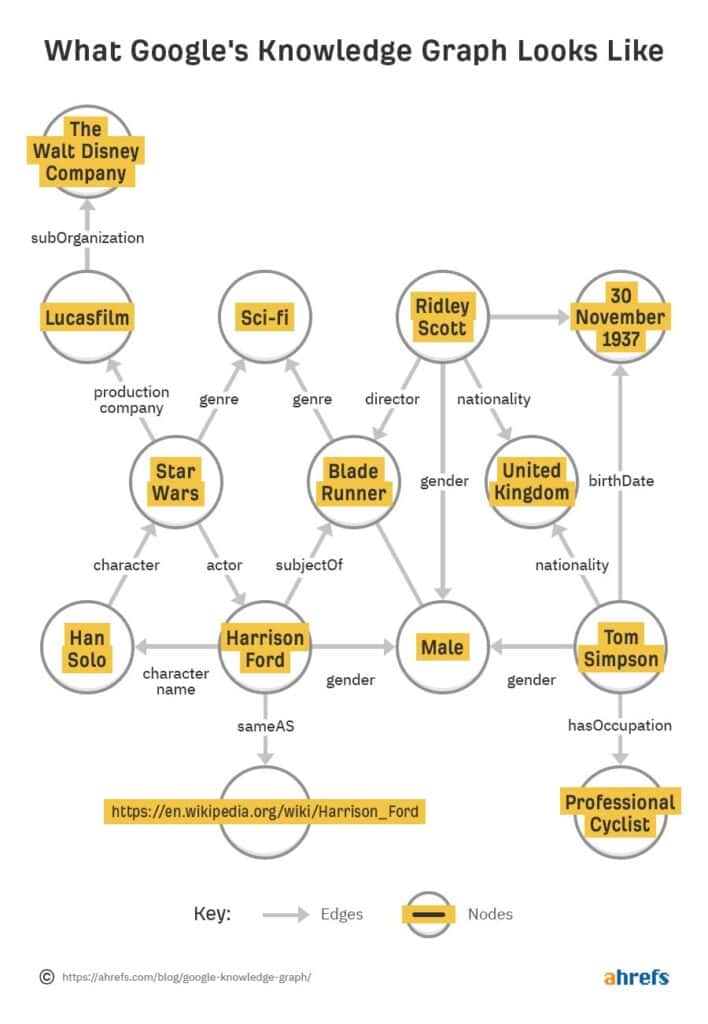
The days of “cherry-picking” high-volume keywords and ranking them in a vacuum are over. In 2026, Google’s transition from a keyword-matching engine to an entity-based “Knowledge Graph” is complete.
Source: Ahrefs
Search engines now evaluate your site’s expertise across an entire subject matter rather than evaluating pages in isolation. If you try to rank for a high-intent term like “Sales Pipeline Management” but lack a deep, interconnected library of content covering the nuances of CRM hygiene and lead scoring, your rankings remain brittle and temporary.
Why It Matters for SaaS Companies
For growth-stage SaaS brands, topical authority is your protection against algorithm volatility. When an AI Overview looks for a source to cite, it considers the brand that demonstrates the most comprehensive Knowledge Graph.
“Topical authority isn’t about publishing more content. It’s about proving you understand an entire subject area. SaaS brands that build connected content hubs signal deeper expertise to search engines and earn more stable rankings.”
Studies have repeatedly proven that sites with well-defined content hubs (where a pillar page is supported by 15-20 specific sub-topic articles) recover from core updates faster than sites with fragmented content strategies. Authority is about the architectural proof that you own the category.
What to Do About It
- Build Content Clusters: Identify 5 to 7 core topics your brand needs to own. For each, create a comprehensive pillar page (2,500 to 4,000 words) that covers the broad theme. Then build 10 to 30 supporting articles addressing specific subtopics, use cases, and questions. Every supporting page should link to the pillar and vice versa. This structure shows depth that search engines reward.
- Audit Your Internal Linking Architecture: Strong internal linking passes authority between pages and helps search engines understand contextual relationships between content. Go through your top-performing pages. Are they semantically linked to related content? Can a reader navigating your site naturally discover connected topics? If not, optimize accordingly.
- Cover Subtopics Comprehensively: Look at the “People Also Ask” boxes and related searches for your core topics. Those are your content gaps. Build pages that thoroughly answer those questions.
- Prioritize Entity Coverage Over Keyword Density: Map the entity landscape for your category and ensure your content addresses everything a knowledgeable reader would expect. When you write about “customer churn,” you should also cover related entities like retention metrics, cancellation flows, win-back campaigns, and customer health scores.
- Measure Topical Authority, Not Just Keyword Rankings: Traditional rank tracking tells you about individual pages. What matters now is your visibility across entire topic clusters. Track share of voice for your core categories, featured snippet presence, and brand search growth as signals that authority is building.
| Quick Win: Pick one high-value feature. Build a 5-page cluster around it this month, and link them tightly. You’ll often see rankings improve across the entire topic within a single crawl cycle. |
Trend #6: Brand Search Becomes a Ranking Advantage
What’s Happening
Search engines are rewarding brands that people actively look for with faster indexing and more stable rankings across related keywords. As search engines transition from “matching strings” to “identifying entities,” they prioritize brands that people ask for by name.
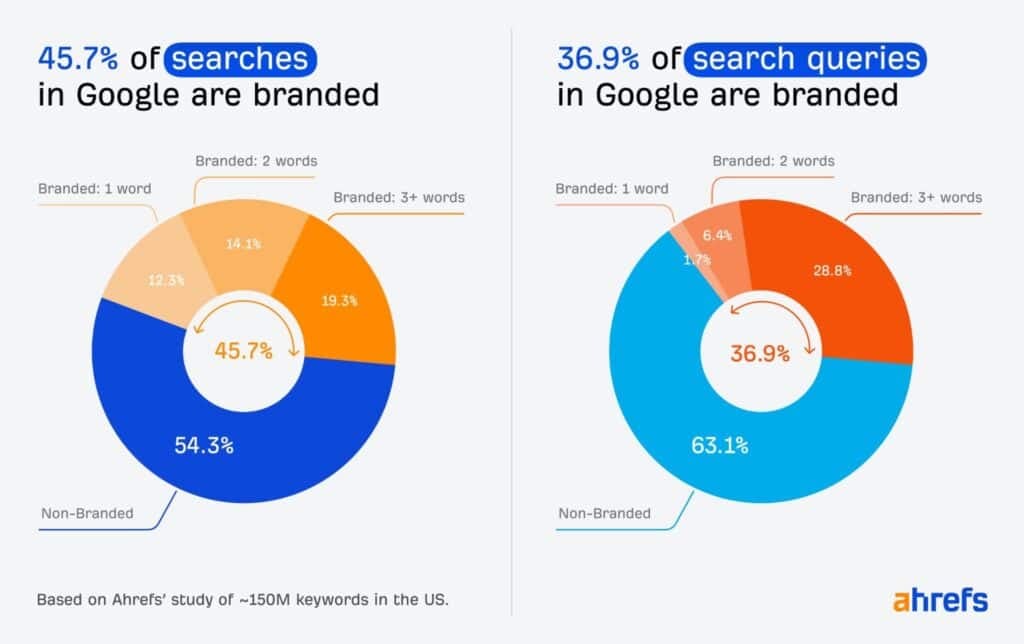
A 2025 Ahrefs study covering ~150 million keywords in the US shows that 36.9% of search queries are branded, but when volume is accounted for, branded searches make up 45.7% of all Google searches.
Source: Ahrefs
In the “zero-click” environment, search engines and AI agents use these queries as the primary barometer for trust. If users are searching for “{{Your Brand}} + {{Keyword}},” Google interprets this as a definitive signal that you own that topic, often rewarding you with the top rankings for the non-branded version of that keyword as well.
People also tend to click brands they recognize, even when alternatives rank nearby. And that engagement feeds back into search signals.
Why It Matters for SaaS Companies
Brand search volume is both a downstream indicator of how well your demand generation is working and an upstream input into how Google evaluates your authority. Sites with strong direct search demand tend to maintain more stable rankings overall.
There’s a compounding effect here that most startup SEO teams miss entirely. The companies investing in thought leadership, category education, and genuine audience building are creating an SEO foundation that protects them from volatility in ways that pure keyword optimization can’t.
This flywheel effect means SEO is no longer something you can isolate from the rest of marketing. All brand work your team does (podcasts, events, influencer campaigns, thought leadership) directly feeds organic performance.
What to Do About It
- Invest in Awareness Channels That Reach Your ICP: Founder content, partner webinars, niche newsletters, and communities often outperform generic ads.
- Align Messaging Across Marketing and SEO: Use the same category language in ads, landing pages, and content clusters.
- Track Branded Search Growth in Google Search Console: Watch queries that include your name plus feature or use case terms.
- Build Review Presence on Trusted Sites and Integration Marketplaces: These pages, with existing authority, often rank for your brand first.
| Strategic Shift: Organic search performance is increasingly a reflection of offline brand-building. The SaaS companies with the most stable, compounding organic growth in 2026 aren’t just the ones with the best content. They’re the ones people are actively searching for. |
Trend #7: SEO for AI Discovery Becomes a Core Growth Channel
What’s Happening
The “search” part of the buyer journey is being outsourced to AI agents. Platforms like Perplexity, ChatGPT, and Claude have become the primary discovery layer for a growing number of SaaS researchers. Although AI search has a small market share compared to Google, it is increasingly a first touchpoint in the buyer journey in the SaaS market.
This shift has birthed Generative Engine Optimization (GEO), a discipline focused on making your brand “cite-able” by LLMs. Unlike traditional SEO, which prioritizes ranking your URL, GEO focuses on ensuring your brand is the “consensus answer” across the datasets AI models consume.
“LLMs love consensus, and they love to repeatedly use the same domains as citations in answers. One of the best ways to build LLM visibility is brand mention building on websites that are already trusted.”
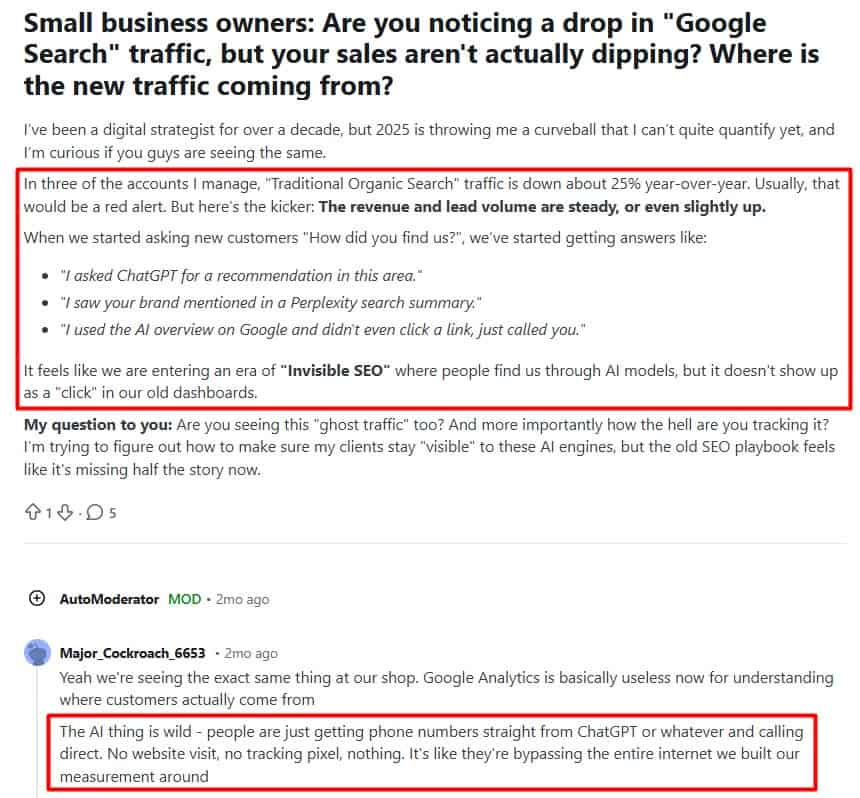
Structured content, strong positioning, and third-party mentions all influence whether your product appears in answers. Early studies from Gartner predicted a 25% drop in traditional search engine volume by 2026 as generative AI answers more queries directly.
While that exact number remains to be seen, quite a few companies are noticing a decline in overall search volume:
Source: Reddit
Why It Matters for SaaS Companies
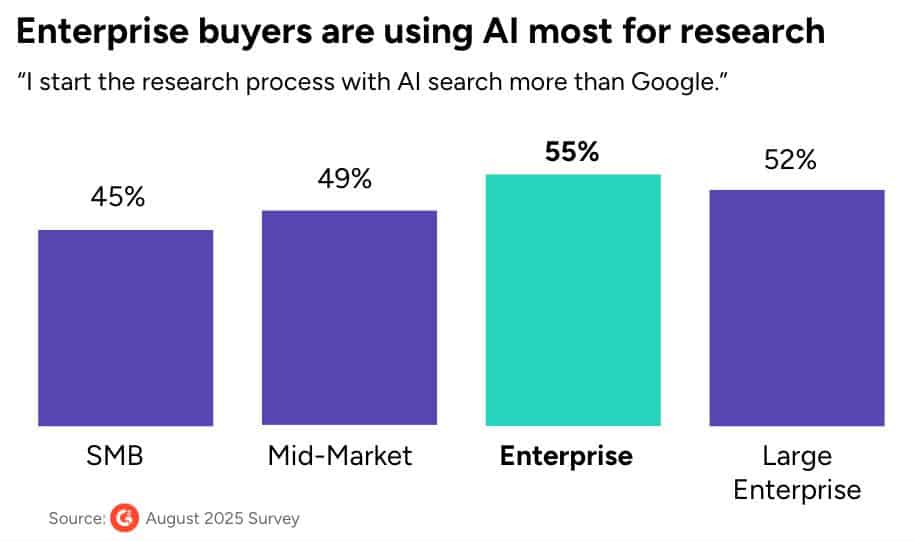
AI answers compress the consideration set. If you aren’t in AI’s shortlist of SaaS tools, you’re essentially invisible to approximately half of all enterprise decision-makers who now start their software research inside a chat interface.
Source: G2
In this citation economy, your website is just one data point; the AI’s recommendation is a synthesis of what the entire web says about you. Clear category language helps models understand what you do. Authoritative mentions signal trust. Structured content makes your information easy to parse and reuse.
What to Do About It
- Write Explicit Positioning Statements on Key Pages: Say who you serve, what problem you solve, and how you differ in plain language.
- Add Structured Content: Use schema markup, clear headings, FAQs, and concise summaries across your website.
- Build Authoritative Mentions: Identify third-party sources AI platforms are already citing in your space (review sites, industry publications, comparison guides), and make earning mentions there a part of your off-page strategy.
- Track Citations: Search your brand in AI tools monthly and note which sources they quote. Improve or expand those sources. Or use software like Profound or Eldil to automatically track citations on a regular schedule.
- Maintain a Consistent Presence: Make sure your product, your category, and your ideal customer are described the same way everywhere your brand appears. Clarity and consistency are the new ranking signals.
- Align PR and SEO: Product launches, integrations, and case studies should live on third-party sites as well as your own.
Quick Win:
Run these three prompts through ChatGPT, Perplexity, or Claude: “What is {{your brand}}?” “{{Your brand}} vs {{top competitor}}” and “Best {{your category}} for {{your core use case}}.” Note whether your positioning is accurate and which third-party sources the models cite. Those sources are your highest-leverage outreach targets for your next backlink-building campaign.
Trends #8: Conversion Rate Optimization Becomes Inseparable from SEO
What’s Happening
Ranking is one part of the search visibility equation. Converting visitors is another.
AI summaries and higher-intent clicks mean fewer people reach your site, but the ones who do are closer to a purchase decision.
If a user clicks your #1 result for “Best CRM for Startups” but bounces because your pricing is hidden or your demo form is 12 fields long, the search engine may interpret that as a failed intent match, especially if that user goes back to the SERP and clicks through to a competitor.
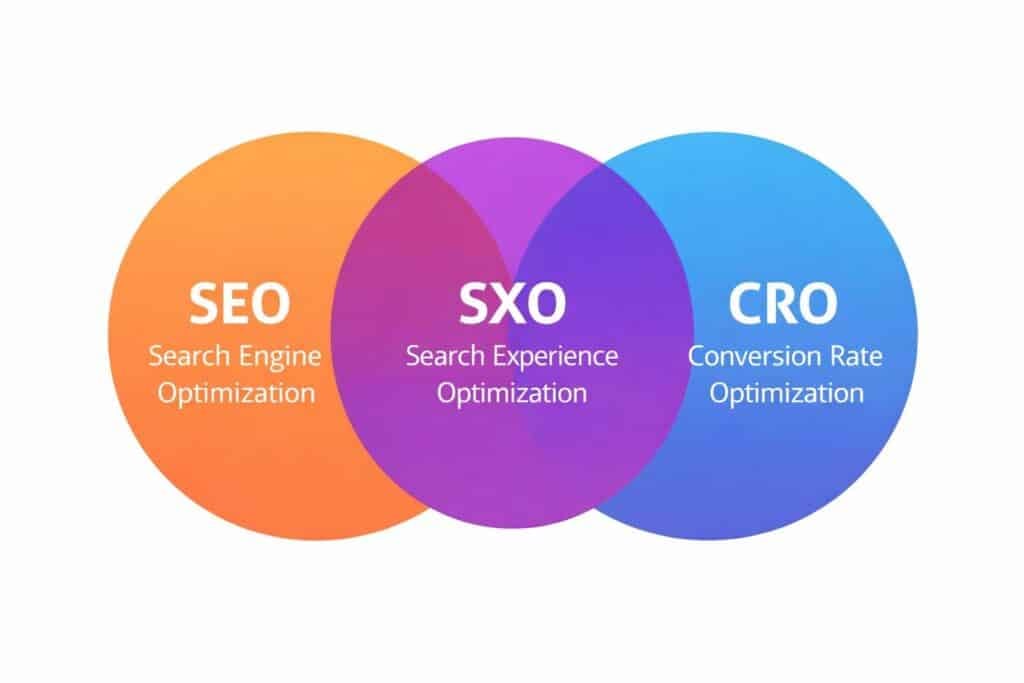
SEO and Conversion Rate Optimization (CRO) have merged into a single discipline: Search Experience Optimization (SXO).
Why It Matters for SaaS Companies
SEO now feeds a smaller, more qualified audience into your funnel. If your pricing page is confusing or your demo form feels risky, you lose buyers who are ready to act.
Consider a product page with 10,000 monthly organic visits. If 3% click through to a demo request and 30% complete the form, the overall conversion rate is roughly 0.9%. Increasing the CTR to 4% or improving form completion to 40% materially increases the pipeline without adding a new visitor.
Across many SaaS marketing teams, the pages with the highest organic intent signals (comparisons, pricing, use cases, demo requests) are often the ones that receive the least conversion attention. That’s backward.
These are the pages where a buyer is closest to a decision. The gap between ranking well and converting well on those pages is pure revenue leakage.
What to Do About It
- Map Search Intent to Page Experience: Every keyword carries an implicit job-to-be-done. Someone searching “pricing” wants transparency. Someone searching for “demo” wants proof that you’re the solution to their needs. Audit your highest-traffic organic landing pages against what searchers need at that moment, and fix all mismatches.
- Treat Pricing Pages as Conversion Assets: The winning approach is fairly straightforward: transparent tiers, clear feature differentiation, and obvious next steps. For the best results, include satisfaction guarantees and answers to common objections before users ask.
- Place Social Proof Where Decisions Happen: A testimonial on your homepage builds trust. A testimonial on your pricing page builds conviction. A case study on your demo page answers “has this worked for someone like me?” before the prospect asks. Map every piece of social proof to the objection most active at that stage of the journey. Specific proof at the right moment is golden.
- Design Intent-Based CTAs: Match your CTA language to where the buyer is in the buyer’s journey. Top-of-funnel visitors need education. Bottom-of-funnel visitors need a path forward. Use your search data to infer intent and adjust CTAs accordingly.
- Run Conversion Audits on Every High-Value Page: Pick your top 10 pages by organic pipeline influence. Review them for clarity, speed, mobile experience, and friction points. Watch session recordings if you have them. Where do users hesitate? Where do they leave? Fix those specific points before you optimize another page for rankings.
| Common Mistake: Obsessing over ranking position while ignoring what happens after the click. A page ranking third that converts at 4% will consistently outperform a page ranking first that converts at 1.5%. The SEO win only matters if the page is built to capitalize on it. |
What Winning SaaS SEO Looks Like in 2026
A modern SaaS SEO engine drives predictable, revenue-aligned growth by aligning content, product, and buyer intent at every stage of the funnel. The most successful SaaS companies have moved from measuring success primarily in traffic volume to pipeline contribution.
Here’s what their blueprint looks like:
- Clear Category Positioning: Not generic “we help businesses grow” positioning but specific, defensible positioning that tells a buyer exactly what problem you solve, for whom, and why you’re the obvious choice. That clarity flows into every content decision and every use-case cluster.
- Strong Comparison and Alternative Content: Pages like “{{Your Product}} vs {{Competitor}}” or “Top alternatives to {{Competitor}}” dominate high-intent queries, control brand narrative, and shorten sales cycles.
- Product-Led SEO Assets: Templates, calculators, tools, integrations, and use-case hubs act as acquisition and activation points. These assets rank for commercial intent queries and convert because they solve problems, not just describe them. Visitors engage with your product immediately, which bridges organic traffic to trial and demo.
- Structured Content Clusters: Pillar pages link to subpages covering integrations, workflows, and case studies to share topical authority. Internal linking ensures both users and search engines understand category ownership.
- Strong Backlink Profile: High-quality mentions, guest contributions, and ecosystem partnerships boost domain authority and credibility, especially for AI-powered platforms that rely on authoritative sources.
- High Brand Search Volume: Awareness campaigns, PR, and thought leadership feed SEO performance. Prospects pre-search for your brand, which increases click-through rates and trust.
- Conversion-Optimized High-Intent Pages: Pricing pages, demo flows, and feature comparisons are optimized with intent-based CTAs, social proof, and frictionless micro-conversions.
Pipeline-Aligned Reporting: SEO dashboards track contribution to MQLs, SQLs, and revenue. Teams connect search activity to pipeline impact and opportunities created. SEO becomes a channel to invest in because you can measure the return.
2026 SaaS SEO Checklist
Strategy & Positioning
High-Intent Pages
Product-Led SEO Assets
Content Clusters & Architecture
Link Building & Authority
LLM / AI Discoverability
Conversion Optimization
Want a Free SaaS SEO Opportunity Analysis?
The difference between an organic SaaS SEO program that generates a steady pipeline and one that yields meaningless reports is almost always strategic rather than executional. That’s the hardest kind of gap to self-diagnose.
If you’d like an expert-backed perspective on where your organic growth engine stands, we offer a free comprehensive analysis of your SEO program. We’ll pinpoint your biggest opportunities and what’s worth prioritizing at your specific growth stage and in your specific category.
More specifically, you’ll receive the following:
- Competitive Content Gap Analysis: Where your competitors are earning organic visibility that you aren’t, and which of those gaps are worth closing.
- Commercial-Intent Keyword Mapping: A prioritized view of the high-intent queries your buyers are already using that your current content isn’t capturing.
- SERP Positioning Breakdown: How you’re showing up across the queries that matter most, and where your presence is thin or being outframed by third parties.
- AI Visibility Snapshot: How your brand is currently described and cited across ChatGPT, Perplexity, and Google AI Overviews, and what that means for your discoverability with buyers who start their research there.
Click here to book your SaaS SEO Snapshot.
Or email us directly at marketing@spacebarcollective.com.